Water Hammer in Wastewater Treatment Plants: Infrastructure Risk, Mechanical Stress, and Long-Term System Protection
Water hammer in treatment facilities Is a system-level issue.
Water hammer is the result of a rapid change in fluid velocity within a closed piping system. When flow is stopped or redirected abruptly, the kinetic energy of the moving fluid converts into a pressure wave. That wave travels through the piping network and reflects at changes in direction, elevation, or restriction.
In wastewater treatment facilities, this phenomenon is magnified by system scale.
Municipal and industrial plants typically involve:
- Long horizontal pipe runs
- Large pipe diameters
- Vertical elevation transitions
- Frequent pump cycling
- Automated valve actuation
- Multiple process zones operating at different pressures
Unlike compact industrial equipment, wastewater systems contain significant fluid mass. When that mass is forced to decelerate quickly, the resulting pressure surge is not isolated – it propagates through the network.
Over time, repeated surge events contribute to mechanical fatigue.
How Pressure Surge Affects Wastewater Infrastructure
Water hammer does not usually cause immediate catastrophic failure. Instead, it introduces cyclical stress.
That stress can lead to:
- Flange bolt loosening
- Gasket compression fatigue
- Micro-leak development
- Instrumentation drift
- Accelerated pump seal wear
- Valve seat degradation
These are maintenance issues that appear unrelated on the surface. However, in systems experiencing repeated surge, they often share a common mechanical cause.
Wastewater plants operate continuously. When a valve actuates dozens or hundreds of times per day, small pressure spikes accumulate into long-term structural stress.
For publicly funded infrastructure, this translates into:
- Increased maintenance labor
- Replacement part procurement
- Unplanned service interruptions
- Capital expenditure earlier than expected
Sustainable operation requires more than energy efficiency. It requires mechanical stability.
Why Wastewater Systems Are Particularly Vulnerable
Certain characteristics of wastewater treatment amplify water hammer risk:
Long Pipe Runs
The longer the pipe, the greater the volume of moving fluid. Larger fluid mass increases the momentum that must be absorbed when flow changes.
Pump Cycling
Lift stations and process pumps frequently start and stop. When pumps shut down or check valves close, flow transitions can be abrupt.
Process Transitions
Clarifiers, digesters, aeration basins, and discharge lines often operate at different pressure levels. Rapid actuation between zones can create transient pressure conditions.
Large Diameter Piping
Large diameter lines reduce velocity but increase total mass. Momentum remains significant.
In these environments, valve selection directly influences how energy is dissipated.
The Relationship Between Valve Closing Speed and Surge
One of the most influential mechanical factors in water hammer is valve closing speed.
A direct-acting solenoid valve typically closes quickly once de-energized. This rapid shutoff can create an abrupt velocity change in the fluid column.
Pilot-operated piston valves behave differently.
Piston-operated valves require differential pressure to actuate and close in a more controlled manner. The internal piston assembly allows fluid momentum to dissipate gradually rather than instantaneously.
The result is a reduced rate of deceleration.
Hydraulic theory confirms that surge pressure is proportional to the rate of velocity change. Slower deceleration reduces peak transient pressure.
In wastewater facilities with long piping networks, that difference matters.
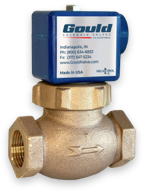
Gould’s Velvetrol® Internal Piston Design and Controlled Closure
As a standard feature on almost all Gould valve models, our Velvetrol® internal piston pilot operated design delivers critical performance advantages that directly address common operational challenges.
This design:
- Uses differential pressure for operation
- Provides stable piston movement
- Allows controlled closure under system pressure
- Reduces abrupt flow stoppage
In addition, Gould also offers factory slow-close (-81) configurations for applications where surge mitigation is a priority.
The objective is not to eliminate system dynamics – no valve can remove hydraulic principles – but to manage them in a way that protects infrastructure.
When a valve closes more gradually, energy is absorbed through the system over time rather than released in a sharp transient spike.
Water Hammer and Sustainability: A Mechanical Perspective
Sustainability in wastewater treatment is frequently discussed in terms of:
- Energy efficiency
- Chemical optimization
- Emissions control
Mechanical durability is equally important.
Repeated infrastructure replacement increases:
- Material consumption
- Manufacturing demand
- Labor requirements
- System downtime
A valve that contributes to reduced mechanical stress supports:
- Longer piping life
- Reduced replacement frequency
- Stable pump operation
- Fewer emergency repairs
This aligns directly with sustainable asset management practices.
Wastewater facilities operate for decades. Equipment decisions should be evaluated on lifecycle impact, not initial procurement cost alone.
Design Considerations When Specifying Valves for Wastewater
Engineers evaluating surge risk should consider:
Valve Type
Pilot-operated piston valves generally provide more controlled closure than direct-acting designs in systems with sufficient differential pressure.
Pressure Rating
Valves should be rated appropriately for system maximum pressure and transient conditions.
Material Construction
Cast bronze and 316 stainless steel bodies must match the chemical and environmental exposure.
Seal Compatibility
EPDM, Viton®, and Teflon™ options should align with wastewater chemistry.
Mounting Orientation
Proper installation – coil upright and horizontal piping when specified – ensures stable operation.
Gould valves are manufactured with cast valve bodies and precision-machined internal components designed for long-term performance in demanding environments.
Made in the USA: Stability Through Manufacturing Control
Gould Solenoid Valves are manufactured in Indianapolis.
Maintaining domestic production allows us to:
- Control machining tolerances
- Ensure consistent casting quality
- Maintain inventory availability
- Provide repair kits and long-term support
In municipal wastewater systems where downtime disrupts service, predictable performance and availability are essential.
Fast shipping reduces exposure during emergency replacement.
But long-term stability reduces the likelihood of those emergencies.
When to Evaluate Surge Mitigation in Your Facility
Facilities should consider reviewing valve closing behavior if they observe:
- Repeated gasket replacement
- Pipe vibration during actuation
- Pump seal failures
- Instrumentation recalibration issues
- Audible shock during valve closure
These symptoms may indicate transient pressure conditions.
Evaluating closing speed and valve design can provide a practical mechanical solution.
Protecting Infrastructure Requires the Right Mechanical Approach
Water hammer cannot be ignored in wastewater treatment systems. It is a predictable hydraulic behavior.
However, it can be managed.
By selecting piston-operated valves with controlled closure characteristics, facilities reduce mechanical stress and extend infrastructure life.
Gould has manufactured two-way solenoid valves for four generations. Our focus has always been durability, controlled performance, and long-term reliability.
In wastewater systems that operate continuously, stability is not optional.
It is foundational.
Frequently Asked Questions: Water Hammer in Wastewater Treatment Facilities
What causes water hammer in wastewater treatment plants?
Water hammer is caused by a rapid change in fluid velocity within a closed piping system.
In wastewater facilities, common triggers include:
- Sudden valve closure
- Pump shutdown or rapid cycling
- Check valve slam
- Changes in elevation or flow direction
- Automated actuation in long pipe runs
When flow stops abruptly, the momentum of the moving fluid converts into a pressure wave. That pressure wave travels through the system and reflects at fittings, elbows, and dead ends.
Because wastewater plants often use long and large-diameter piping, the mass of moving fluid can be significant – increasing surge potential.
Is water hammer more severe in large municipal systems than in smaller industrial systems?
In many cases, yes.
Larger systems contain greater fluid volume and longer pipe runs. When flow velocity changes quickly in those systems, the resulting pressure wave can travel farther and reflect multiple times before dissipating.
The severity of water hammer depends on:
- Pipe length
- Pipe diameter
- Fluid velocity
- Elastic properties of pipe material
- Valve closing time
Municipal wastewater systems often combine several of these risk factors.
How does valve closing speed affect water hammer?
The magnitude of transient pressure is directly related to how quickly fluid velocity changes.
A valve that closes very quickly forces the entire fluid column to decelerate almost instantly. That abrupt deceleration increases surge pressure.
A valve that closes in a more controlled manner allows the energy to dissipate over time.
In wastewater systems with long pipe runs, controlled closure can significantly reduce peak pressure spikes compared to instantaneous shutoff.
Pilot-operated piston valves generally provide more controlled operation than direct-acting valves in systems with adequate differential pressure.
Can solenoid valves contribute to water hammer?
Yes.
If a solenoid valve closes abruptly in a system with high flow velocity or long piping runs, it can initiate a transient pressure event.
Direct-acting solenoid valves tend to close quickly once de-energized. In sensitive systems, this rapid actuation may increase surge intensity.
Piston-operated designs that rely on system pressure for actuation can provide more gradual closure characteristics, depending on configuration.
Selecting the correct valve design for system conditions is important in minimizing surge-related stress.
How can wastewater facilities reduce water hammer without redesigning the entire system?
System redesign is not always necessary.
Facilities can evaluate:
- Valve type and closing characteristics
- Pump ramp-down timing
- Installation of surge mitigation devices
- Proper valve sizing
- Use of slow-close configurations
In many cases, improving valve closing control is a practical first step.
Because valves are frequent actuation points, modifying their behavior can reduce repetitive surge events without altering piping layout.
What are signs that water hammer may be damaging our system?
Facilities experiencing water hammer may observe:
- Audible banging during valve actuation
- Pipe vibration
- Loosened flange bolts
- Frequent gasket replacement
- Pump seal wear
- Instrument calibration drift
- Premature valve seat wear
These symptoms do not always indicate catastrophic failure. However, repeated transient stress can accelerate wear over time.
If these patterns appear consistently during flow transitions, evaluating surge behavior is warranted.
Does reducing water hammer improve system lifespan?
Reducing repeated transient pressure events can lower cumulative mechanical stress on:
- Piping joints
- Gaskets
- Valve seats
- Pump seals
- Instrument connections
Lower stress cycles typically extend component service life and reduce maintenance frequency.
While surge reduction does not eliminate all wear factors, it reduces one significant contributor to infrastructure fatigue.
Are piston-operated solenoid valves better for wastewater systems?
Piston-operated solenoid valves are often well-suited for wastewater systems where:
- Differential pressure is available
- Controlled closure is beneficial
- Larger pipe sizes are involved
- System stability is a priority
Because they rely on system pressure for operation, piston valves tend to provide more stable actuation characteristics compared to many direct-acting designs.
Gould’s Velvetrol® internal piston design is specifically engineered for durability and controlled operation in demanding environments.
Proper specification remains essential, as system conditions vary.
How do I determine if my facility needs a slow-close valve configuration?
A slow-close configuration may be beneficial if:
- Surge is audible during valve actuation
- Maintenance related to gasket or joint fatigue is recurring
- Long pipe runs are present
- High flow velocities are common
- The system includes large diameter piping
Evaluating closing time relative to pipe length and flow velocity can help determine if controlled closure would reduce transient pressure.
Gould offers factory-configured slow-close options designed to reduce abrupt flow stoppage in sensitive systems.