5 Key Factors When Choosing Solenoid Valves for Food & Beverage Applications
Why Solenoid Valve Selection Matters in Food & Beverage Systems
Solenoid valves are used across industries, from industrial automation to food processing, to control the flow of air, gases, and liquids. In the food and beverage industry, choosing the right valve is critical to performance, safety, and sanitation.
At Gould Solenoid Valves, we specialize in precision-engineered, made in the USA valves designed for durability in demanding environments. If you're selecting a solenoid valve for a food or beverage application, here are five essential considerations to guide your decision.
1. Media Compatibility
Understanding what will flow through the valve is the first step. Water, oils, acidic juices, and cleaning agents each require different valve materials.
- Acidic or corrosive fluids can degrade untreated brass or bronze
- Stainless steel and 316SS offer superior corrosion resistance
- Consider both internal media and external exposure to cleaning solutions
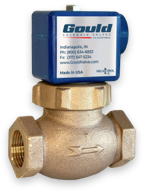
For food and beverage use, stainless steel solenoid valves like Gould's K or KX Series are typically recommended due to their chemical resistance and cleanability.
2. Temperature Range
Media and ambient temperature can dramatically affect valve performance and coil longevity.
- Plastic valves are suitable for room temperature media
- High-temp media (steam, hot oil, heated gases) require metal-bodied valves
- Extreme heat can degrade seals or burn out coils
- Cold environments may require freeze-resistant or specialty valves
Always check the manufacturer’s rated temperature range before installation.
3. Environmental Exposure & Enclosure Type
External conditions are just as critical as what flows inside the valve. Enclosure ratings (NEMA) determine how well a valve stands up to its surroundings.
- NEMA 1: Basic indoor protection
- NEMA 4/4X: Watertight or watertight + corrosion resistant (ideal for washdown areas)
- NEMA 5: Dust-tight (for dry powders or food processing dust)
- NEMA 7: Explosion-proof (for environments with flammable gases or vapors)
Gould offers solenoid valves in all key NEMA configurations to match application demands.
4. Valve Body Material
Valve body materials must align with both media compatibility and environmental factors.
- Brass or bronze may be suitable for neutral fluids
- Stainless steel resists corrosion and supports sanitary conditions
- 316SS is ideal for acidic or saline fluids
While stainless steel valves are typically more expensive, their longevity and resistance to contamination often make them the better long-term investment in food-grade applications.
5. Seal Material Selection
Seal materials determine chemical compatibility, operating temperature range, and pressure tolerance. In the food and beverage industry, commonly used seal materials include:
- EPDM (Ethylene Propylene): Resistant to water, acids, and alkalis; not suitable for oils or high heat
- PTFE (Teflon): High chemical resistance and temperature tolerance
- Viton & Buna: Available for specialty media and environments
Gould offers a wide selection of seal options to match your specific application.
Gould Solenoid Valves for the Food & Beverage Industry
Not all valves are built for sanitary or harsh process environments. Gould Solenoid Valves manufactures precision-built, American-made solenoid valves designed for reliable use in the food and beverage industry.
- Available in 316 stainless steel and multiple seal types
- Offered with NEMA-rated enclosures for washdown and industrial environments
- Built and tested in Indianapolis with fast lead times and expert support
Need help matching a solenoid valve to your food or beverage application? Contact our team for a custom quote!