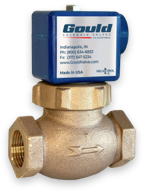
Car, Truck & Fleet Wash Solenoid Valves: Keep Every Bay Open, Every Cycle Consistent
When a solenoid valve fails in an automated car or truck wash, the problem does not stay inside the equipment room. It shows up as a dead arch, weak spray pressure, overused chemistry, a bay that goes offline, or a queue of customers waiting while your team scrambles to figure out what went wrong.
Solenoid valves control high-pressure water flow, chemical injection, and air-drying cycles in commercial car washes, truck wash systems, and fleet maintenance facilities — along with core water, soap, wax, rinse, and compressed air functions throughout the wash sequence. When they work, the wash runs like it should. When they do not, the symptoms hit your wash quality, your chemical costs, and your throughput all at once.
Whether you operate a single-site tunnel, manage a multi-location chain, run a fleet wash facility, or manufacture wash equipment, understanding how to choose, maintain, and support your solenoid valves is one of the most direct ways to protect the performance and revenue of your wash system. This guide covers what actually goes wrong with wash valves, how to choose the right ones for your application, how to maintain them before they cause a shutdown, and how to build a parts strategy that keeps your operation moving.
What Solenoid Valves Do in a Wash System
In an automated car or truck wash, solenoid valves are what make the sequence run. They open and close on command to regulate fluid flow, pressure, and chemical delivery so that each stage of the wash happens at the right moment and with the right intensity.
That means valves are involved in nearly every function your system performs:
- Presoak and foam application — activating chemistry before the main wash cycle to loosen road film, grime, and de-icing residue
- High-pressure water flow — controlling water supply to arches, side blasters, and wheel cleaners
- Chemical injection and dosing — delivering precise amounts of soap, wax, tire shine, and sealant at the right point in the cycle
- Undercarriage and wheel blasters — managing high-pressure lines aimed at the lower body panels and underside where corrosive salt and brake dust accumulate
- Rinse, spot-free, and wax cycles — timing and controlling final cleaning and surface protection stages
- Compressed air and air-drying — regulating airflow to blowers in the final stage of the wash
When those valves perform correctly, the wash feels seamless to the customer. When they do not, the symptoms are immediate — in wash quality, in operating efficiency, and in downtime risk.
Why Wash Environments Are Especially Hard on Valves
Car, truck, and fleet wash systems are not typical commercial installations. They combine several conditions that are individually challenging — and together, unusually demanding on fluid-control components.
Constant moisture and humidity. Equipment rooms and wash tunnels expose valve bodies, coils, and electrical connections to humidity, condensation, and direct moisture every shift. Coils without proper enclosure ratings corrode, crack, or burn out from moisture ingress long before they should.
Aggressive chemistry. Presoak formulas, degreasers, wheel cleaners, and fleet wash detergents can be chemically aggressive. Valve seats, O-rings, and body materials that were not selected for compatibility with those media will degrade, leak, or fail ahead of schedule.
High cycle volume. A busy tunnel actuates the same valves dozens of times every hour. Internal components — piston rings, seat seals, pilot assemblies — accumulate wear faster than a low-duty-cycle application ever would. Valves that are sized or specified for lighter service will not hold up.
High-pressure truck and fleet wash service. Standard vehicle wash pressure demands and heavy-duty truck wash service are not the same application. Using a general-purpose valve in a high-pressure truck wash circuit is a reliable path to premature failure and repeat service calls.
Water quality variation. Hard water creates scale buildup on internal orifices and seat surfaces. Reclaim water systems — common in environmentally conscious wash operations — introduce suspended solids and elevated mineral content that can foul pilot assemblies and shorten valve life. Selecting valves and seal materials that match the water quality at your specific site matters.
How a Failing Valve Shows Up Before It Completely Fails
Solenoid valve problems in wash systems rarely announce themselves as a clean failure. They usually show up as symptoms that operators notice and try to work around — until the underlying issue gets worse.
The warning signs most wash teams recognize include:
- A dead spot or gap in arch coverage — one zone that stops spraying or delivers noticeably less pressure, often first noticed as a missed-spot complaint
- A function that will not shut off — a valve stuck open wastes chemistry, water, or air and can overdose vehicles passing through that zone
- Gradual loss of blaster or arch performance — a worn seat or debris-blocked pilot orifice reduces flow without stopping it entirely, making the wash feel inconsistent
- Unexplained increases in chemical consumption — a leaking or partially stuck injection valve overdoses product, showing up in cost-per-wash numbers before anyone investigates the valve itself
- Intermittent bay outages — a valve that fails unpredictably, then resets, is often close to a complete failure
When a tunnel goes down during peak hours, even a short outage has a real revenue cost. A functioning spare parts program and a routine maintenance schedule are what turn those situations from multi-hour shutdowns into quick fixes.
Choosing the Right Gould Valve for Your Wash Application
The most preventable source of premature valve failure in wash systems is misspecification — using a valve that was not designed for the pressure, media, or duty cycle it is asked to handle. Gould's wash-industry product positioning addresses this directly by distinguishing valve series by application:
Gould M and Q Series — Standard Car Wash Applications
For the majority of car wash functions — chemical injection, foam and wax dispensing, low-to-medium pressure rinse circuits, spot-free systems, and standard arch control — Gould's M Series (bronze, NEMA 4X watertight standard, up to 250 PSI) and Q Series (bronze, NEMA 1/4/4X/5/7 options, up to 400 PSI) are the foundation of the car wash valve package.
The M Series ships with NEMA 4X watertight, corrosion-resistant coil enclosures as a standard feature — not an upcharge — which is important in the persistent moisture of a wash equipment room. Both series are built around Gould's Velvetrol® internal piston pilot-operated design, which naturally cushions valve closure to reduce hydraulic shock. In a high-cycle wash system, that controlled closing action matters: every rapid valve cycle creates a pressure wave in the piping, and over thousands of cycles per day, those waves accumulate stress on fittings, manifolds, and connected equipment.
Gould D Series — High-Pressure Truck Wash Applications
For commercial truck wash circuits operating at elevated pressures — undercarriage blasters, wheel cleaners, and heavy-duty surface wash lines — Gould's D Series bronze solenoid valves handle liquid service up to 1,200 PSI. These are not general-purpose valves adapted to high-pressure duty; they are engineered for it.
Using a valve rated for 250 PSI in a 600 PSI truck wash circuit introduces body fatigue, seal failure, and eventual in-service failure. For fleet wash operations where wash quality is tied directly to vehicle appearance, corrosion control, and maintenance standards, correct pressure rating is not optional.
Gould K and KX Series — Corrosive Media and Reclaim Water Applications
For installations where reclaim water, aggressive detergents, or high-TDS water quality creates accelerated corrosion risk, Gould's K Series (investment-cast 316 stainless steel, up to 1,000 PSI depending on configuration) and KX Series (complete 316 SS construction, up to 300 PSI) provide significantly better corrosion resistance than bronze across the entire valve body and internal wetted surfaces. Certain K Series configurations extend beyond corrosive-service duty and are also used in high-pressure wash applications.
One important example is Gould's KST-3T model, which is rated for 20-1000 PSI and used in some high-pressure wash systems where stainless steel construction and higher pressure capability are both important. Fleet wash facilities in salt-belt regions, operations using reclaim systems with elevated mineral or chemical content, and sites where aggressive cleaning chemistry runs through the injection circuit regularly should consider stainless steel body construction as the more durable long-term choice.
Seal Material Selection
The valve body is only part of the equation. The internal seat disc, O-rings, and piston seals must be compatible with the media the valve actually handles. Gould offers multiple seal options across its wash-relevant series:
Seal Material | Best for in Wash Applications |
Buna-N (NBR) | Standard water service, general detergents, most wash fluids |
Viton® (FKM) | Aggressive chemistry, solvents, high-temperature fluids |
Teflon™ (PTFE) | High-pressure and high-temperature service, broad chemical resistance |
Ethylene Propylene (EP) | Low-pressure steam and hot water service |
Using the wrong seat material in a chemical injection application accelerates seat degradation and creates leaks faster than most other failure modes.
A Maintenance Schedule That Prevents Emergencies
Planned maintenance is not just good practice. In a high-cycle wash environment, it is the primary way to stay ahead of failures that would otherwise happen during your busiest hours.
Gould recommends a structured maintenance schedule for car and truck wash facilities. Here is what that looks like in practice:
Daily:
Run two test cycles — one dry and one with a vehicle — to verify that every function in the system activates and performs correctly. Anything that looks weaker or inconsistent compared to baseline is worth flagging before it gets worse.
Weekly:
Inspect valve coils and electrical connections for moisture damage, corroded terminals, or cracked insulation. Confirm that chemical injection functions are dosing consistently — unusual consumption rates often point to a leaking or sticking valve before any other symptom appears.
Monthly:
Test solenoid valve operation under normal use conditions. Inspect strainers upstream of valves; debris in the inlet can block pilot orifices and cause sticking or partial failure. Check for minor body leaks or drips at valve connections.
Quarterly / Semi-Annual (high-cycle positions):
Proactively rebuild high-cycle valves — main arch controls, chemical injection points, undercarriage blasters — using Gould OEM rebuild kits. The rebuild process: depressurize and de-energize the line, remove the coil and inspect for damage, disassemble and inspect the piston, seat disc, and O-rings, clean the bore and orifices, replace worn components with Gould kit parts, reassemble, and verify function before returning to service. If the coil shows signs of overheating or insulation damage, replace it along with the rebuild — replacing only the coil when the underlying pilot assembly caused the burnout will result in repeat failure.
Annual:
Full system inspection of all valve bodies, replacement of consumables, and a review of chemical usage data against baseline to identify any anomalies that suggest valve-related waste.
→ For a full step-by-step maintenance walkthrough, see our [Solenoid Valve Maintenance Guide for Car & Truck Wash Facilities].
Building a Spare Parts and Standardization Strategy
When a valve fails mid-shift, what happens next depends entirely on what is already on your shelf.
Gould's recommendation is straightforward: keep at least one rebuild kit and one spare coil per solenoid valve in your system. That is the difference between a 30-minute fix and a multi-day shutdown waiting on parts. Gould's rebuild kits allow valves to be serviced in-line — replacing worn seats, piston rings, O-rings, and pilot components — without pulling the valve from the system or ordering a complete replacement.
For multi-site operators and chains, standardizing your valve specification across locations compounds that benefit significantly. When every site runs the same Gould valve series with the same rebuild kit, your maintenance team can work confidently at any location, training is consistent, parts inventory is leaner, and you can respond to any site failure from a single consolidated stock.
Gould makes that standardization easier by providing ASCO cross-reference support, which means you can identify the Gould equivalent for whatever is currently installed at each site and build toward a consistent specification going forward — even across locations that have accumulated different valve configurations over time.
For Equipment Manufacturers and System Integrators
If you design and build car wash, truck wash, or fleet wash systems, the valve choices you make at the design stage determine the warranty exposure and field service volume you manage for years after installation. A valve that is poorly matched to pressure, media, or duty cycle does not just create problems for the operator — it creates repeat warranty claims, field service dispatches, and brand reputation risk for the manufacturer.
Gould has supplied American-made solenoid valves to major car and truck wash equipment manufacturers, national wash chains, and municipal fleet services since 1951. For OEMs and integrators, Gould brings:
- Application-matched valve series for both standard vehicle wash and high-pressure truck wash duty
- Consistent production availability from our Indianapolis, Indiana manufacturing facility — the same valve configuration delivered reliably across production runs
- Complete technical documentation — wiring diagrams, dimensional drawings, and specification data that reduce engineering time and eliminate commissioning surprises
- Rebuild kits designed for field serviceability — so your installed equipment can be maintained without full valve replacement, reducing callbacks and improving the customer experience
- Same-day and next-day shipping from stock, so when field issues arise, your service team can respond quickly rather than waiting on extended lead times
Frequently Asked Questions
What solenoid valves are used in car wash systems?
Solenoid valves control high-pressure water flow, chemical injection, air-drying cycles, and wash functions including water, soap, wax, rinse, and compressed air throughout the system. For standard car wash applications, Gould's M and Q Series are the primary recommendation. High-pressure truck wash circuits require the D Series. Corrosive media or reclaim water applications benefit from K or KX Series 316 stainless steel construction.
How often should solenoid valves be maintained in a wash facility?
Daily operational checks, weekly coil and chemistry monitoring, monthly functional testing, and quarterly proactive rebuilds on high-cycle positions are a practical baseline. Annual full-system inspection rounds out the program. Gould provides a complete maintenance framework for car and truck wash facilities.
What are the signs a solenoid valve is starting to fail?
Dead spots or gaps in arch coverage, reduced blaster pressure, inconsistent chemical dosing, functions that will not shut off, and unexplained increases in chemical usage are all common early symptoms. Gould's maintenance guidance identifies worn leads, coil burn, debris in the piston assembly, and leaks as the most common failure conditions to inspect.
What spare parts should a wash facility keep on hand?
Gould recommends at least one rebuild kit and one spare coil per solenoid valve. High-cycle positions — main arches, chemical injection, undercarriage blasters — are the most critical to have stocked. In-line rebuilds from Gould kits allow fast service without full valve replacement.
Can Gould cross-reference my existing valves?
Yes. Gould provides ASCO cross-reference support and can help identify Gould equivalents for existing installed valves, supporting a standardization program across multiple sites or equipment platforms.
Ready to Protect Your Wash Operation?
Gould has been the solenoid valve partner for car wash operators, truck wash facilities, fleet maintenance programs, and wash equipment manufacturers since 1951. Our American-made valves ship from Indianapolis — many same day or next business day — and our engineering team is available to help you match the right valve to your application, cross-reference your installed base, or support a standardization initiative across your sites.
Call us at 800-634-6853 or Request a Quote — and keep every bay open.